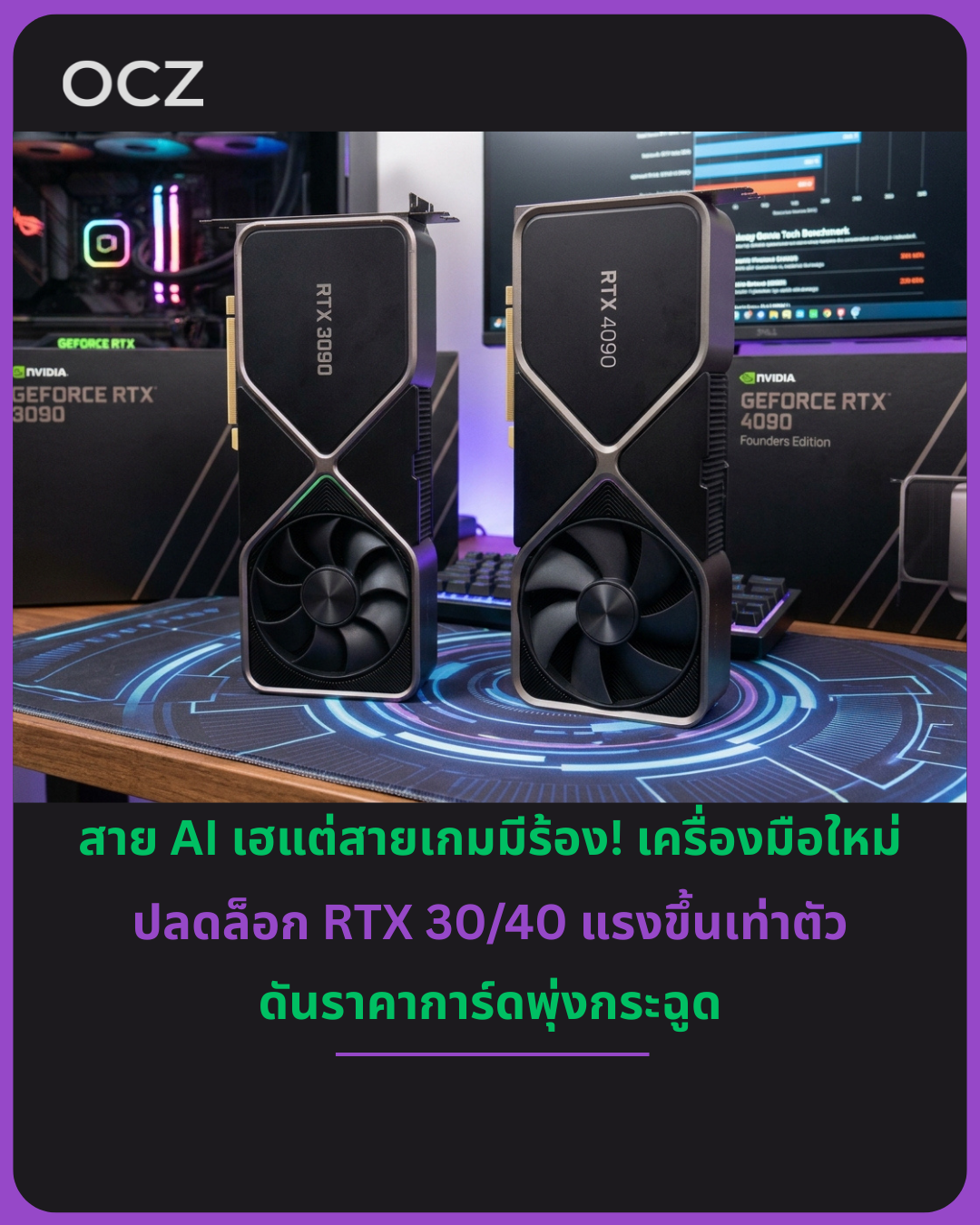
ปลดล็อกการ์ดจอ NVIDIA RTX 30 เพิ่มพลัง AI สูงสุดเกือบ 2 เท่า! RTX 3090 Ti แรงขึ้นด้าน BF16 สูงสุด 80% ดันราคา GPU มือสองพุ่ง
การ์ดจอ NVIDIA GeForce RTX 30 Series ที่เปิดตัวมาตั้งแต่ยุค Ampere กำลังได้รับความสนใจอีกครั้งในตลาด AI หลังมีเครื่องมือโอเพนซอร์สชื่อ Zagitta GPU-Unlock ที่ช่วยปลดล็อกอัตราการประมวลผลคำสั่ง FP16 และ BF16 ให้กลับมาอยู่ในระดับที่สูงขึ้น โดยไม่ต้องแฟลช BIOS หรือดัดแปลงฮาร์ดแวร์
ผลทดสอบจากผู้ใช้งานบางรายพบว่า ประสิทธิภาพการคำนวณเมทริกซ์สำหรับงาน AI บนการ์ดจอ RTX 30 บางรุ่นเพิ่มขึ้นได้ราว 70–80% ขณะที่การใช้งานโมเดลภาษาขนาดใหญ่ หรือ LLM ยังมีรายงานว่าช่วยลดเวลาในการเริ่มตอบคำถามและเพิ่มความเร็วช่วงประมวลผลข้อมูลนำเข้าได้ด้วย อย่างไรก็ตาม ผลลัพธ์ขึ้นอยู่กับรุ่นการ์ดจอ ชนิดของงาน และซอฟต์แวร์ที่ใช้ ไม่ได้หมายความว่าทุกงานจะเร็วขึ้นเกือบสองเท่า
Zagitta GPU-Unlock ปลดล็อกพลังประมวลผลที่ถูกจำกัดไว้
ในยุคเหมืองคริปโต NVIDIA เคยมีการจำกัดประสิทธิภาพการขุดของการ์ดจอ GeForce RTX 30 Series ก่อนที่นักพัฒนาจะค้นพบวิธีปรับแต่งเฟิร์มแวร์และระบบให้สามารถใช้ประสิทธิภาพได้มากขึ้น แม้จะมีการปลดล็อกบางส่วนแล้ว แต่ข้อจำกัดด้านอัตราการส่งคำสั่งคำนวณบางประเภทก็ยังคงอยู่
เครื่องมือ Zagitta ซึ่งเผยแพร่เป็นโอเพนซอร์สบน GitHub ใช้แนวทางปรับค่าตัวเลือกความเร็วของฮาร์ดแวร์ตั้งแต่ก่อนที่ไดรเวอร์ NVIDIA จะเข้าควบคุมการ์ดจอ โดยทำงานผ่าน Linux Kernel Module และไม่จำเป็นต้องแก้ไขไดรเวอร์ NVIDIA โดยตรง จึงช่วยลดความจำเป็นในการแพตช์ไดรเวอร์ใหม่ทุกครั้งที่มีการอัปเดต
การปลดล็อกนี้มุ่งเน้นการเพิ่มอัตราการส่งคำสั่ง FP16/BF16 FMA บน GPU สถาปัตยกรรม Ampere บางรุ่น โดยครอบคลุมชิปตระกูล GA102, GA103, GA104 และ GA106 ซึ่งพบใน GeForce RTX 30 Series หลายรุ่น
ปัจจุบันเครื่องมือดังกล่าวรองรับ Linux เป็นหลัก ยังไม่มีการรองรับ Windows อย่างเป็นทางการผ่านเครื่องมือนี้ แม้ว่าจะมีรายงานการทดลองใช้วิธีปลดล็อกในแนวทางอื่นบน Windows มาก่อนก็ตาม
RTX 3090 Ti แรงขึ้นด้าน BF16 ถึง 80% ในการทดสอบ
หนึ่งในผลทดสอบที่น่าสนใจที่สุดมาจาก GeForce RTX 3090 Ti โดยใช้การคำนวณเมทริกซ์ขนาดใหญ่ 8,192³ พร้อมสะสมผลลัพธ์แบบ FP32 และทดสอบหลายรอบ พบว่าประสิทธิภาพเพิ่มขึ้นอย่างชัดเจนหลังปลดล็อก
|
รูปแบบการคำนวณ |
ก่อนปลดล็อก |
หลังปลดล็อก |
ประสิทธิภาพเพิ่มขึ้น |
|---|---|---|---|
|
FP16 |
87.46 TFLOPS |
118.39 TFLOPS |
35% |
|
BF16 |
87.50 TFLOPS |
157.41 TFLOPS |
80% |
|
TF32 |
42.58 TFLOPS |
82.61 TFLOPS |
94% |
ข้อมูลจากโครงการ Zagitta แสดงให้เห็นว่า การเพิ่มขึ้นไม่ได้เท่ากันในทุกความแม่นยำ โดย BF16 ซึ่งใช้ในงาน AI จำนวนมากเพิ่มขึ้นประมาณ 80% ส่วน TF32 เพิ่มขึ้นเกือบเท่าตัวในการทดสอบนี้
สำหรับ RTX 3080 10GB มีรายงานว่าประสิทธิภาพ FP16/BF16 เพิ่มจากประมาณ 65 TFLOPS เป็น 110–113 TFLOPS โดยยังใช้กำลังไฟตามค่าโรงงานที่ 320W แสดงให้เห็นว่าการปลดล็อกอาจช่วยเพิ่มประสิทธิภาพการคำนวณได้โดยไม่จำเป็นต้องเพิ่ม Power Limit ในทุกกรณี
การ์ดจอ RTX 30 รุ่นไหนได้ประโยชน์บ้าง?
ผลการทดสอบและรายงานจากผู้ใช้งานระบุว่า การ์ดจอแต่ละรุ่นได้รับประโยชน์ไม่เท่ากัน ดังนี้
|
รุ่นการ์ดจอ |
ผลการปลดล็อกด้าน BF16 GEMM |
|---|---|
|
RTX 3090 Ti |
เพิ่มขึ้น 68–80% |
|
RTX 3090 |
เพิ่มขึ้น 25–67% |
|
RTX 3080 Ti 20GB รุ่น OEM |
ปลดล็อกได้ แต่ BF16 ยังทำงานที่อัตราครึ่งหนึ่ง |
|
RTX 3080 10GB |
เพิ่มขึ้น 70–73% |
|
RTX 3080 20GB รุ่นเพิ่มหน่วยความจำ |
เพิ่มขึ้น 56–59% |
|
RTX 3070 |
เพิ่มขึ้น 73–81% |
|
RTX 3070 Ti |
ยังไม่มีผลทดสอบยืนยันกับโมดูลนี้ |
|
RTX 3060 12GB |
มีรายงานเพิ่มขึ้นประมาณ 80% |
ตัวเลขเหล่านี้เป็นผลจากการทดสอบเฉพาะงาน ไม่ใช่การรับประกันว่าการ์ดจอทุกรุ่นจะได้รับประสิทธิภาพเพิ่มขึ้นตามเปอร์เซ็นต์ดังกล่าว โดยเฉพาะการ์ดที่ใช้ชิปหรือเฟิร์มแวร์ต่างจากรุ่นที่ผ่านการทดสอบแล้ว
ใช้กับ AI LLM แล้วเร็วขึ้นแค่ไหน?
ประโยชน์ไม่ได้มีเพียงคะแนน TFLOPS ในการทดสอบเท่านั้น เพราะมีรายงานจากการใช้งานโมเดลภาษาขนาดใหญ่ผ่าน vLLM ว่า การปลดล็อกช่วยให้ขั้นตอน Prefill ซึ่งเป็นช่วงประมวลผลข้อมูลนำเข้าหรือบริบทก่อนเริ่มสร้างคำตอบ ทำงานเร็วขึ้นประมาณ 33–36% พร้อมลดเวลา TTFT หรือเวลาตั้งแต่ส่งคำถามจนได้รับโทเคนแรกประมาณ 25%
อย่างไรก็ตาม ความเร็วช่วง Decode ซึ่งเป็นการสร้างข้อความตอบกลับทีละโทเคนไม่ได้เพิ่มขึ้นอย่างมีนัยสำคัญในผลทดสอบดังกล่าว เพราะขั้นตอนนี้ยังขึ้นอยู่กับข้อจำกัดอื่น ๆ รวมถึงแบนด์วิดท์หน่วยความจำด้วย
ขณะเดียวกัน ผู้ใช้งานยังคงพยายามปรับแต่งซอฟต์แวร์และโมเดลให้ทำงานได้เร็วขึ้นบนการ์ดจอรุ่นเก่า เช่น RTX 3090 24GB ที่มีรายงานการทดสอบโมเดล Qwen3.8-27B ด้วยความเร็วสูงถึง 381 โทเคนต่อวินาที แต่ตัวเลขดังกล่าวมาจากการใช้เทคนิคเร่งความเร็วหลายอย่างร่วมกัน ไม่ใช่ผลจาก GPU-Unlock เพียงอย่างเดียว
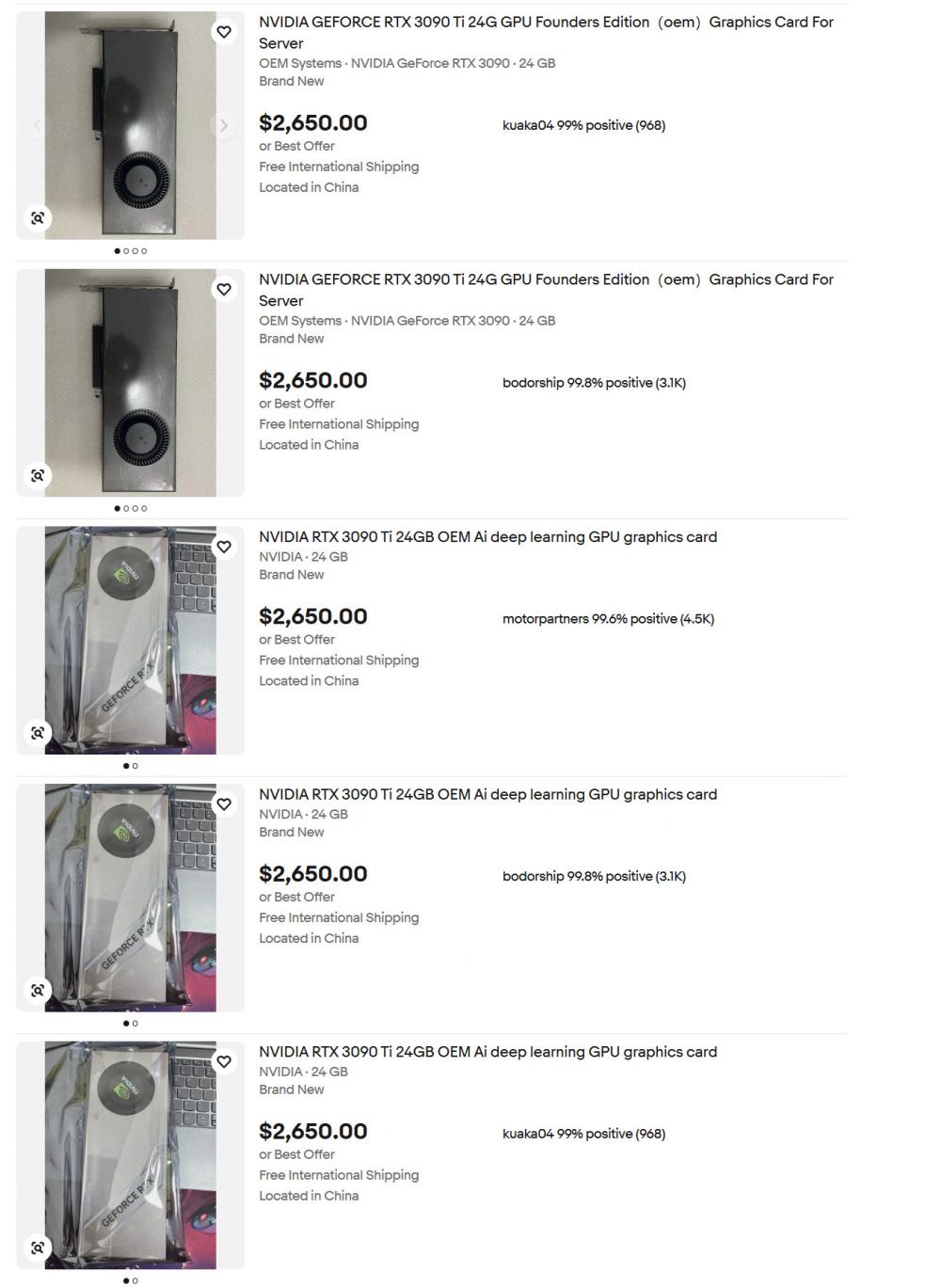
RTX 3090 มือสองพุ่งทะลุ 67,000 บาท ส่วน RTX 3090 Ti ใกล้แตะ 100,000 บาท
เมื่อการ์ดจอรุ่นเก่ากลับมามีความสามารถด้าน AI มากขึ้น ความต้องการในตลาดมือสองก็เพิ่มตามไปด้วย โดยเฉพาะ RTX 3090 ที่มีหน่วยความจำ GDDR6X ขนาด 24GB ซึ่งเหมาะกับผู้ที่ต้องการรันโมเดล AI ภายในเครื่องโดยไม่ต้องลงทุนซื้อการ์ดจอระดับมืออาชีพราคาแพงกว่า
ราคาที่รายงานในตลาดต่างประเทศมีดังนี้
|
รุ่นการ์ดจอ |
ราคาที่รายงาน |
คิดเป็นเงินบาทโดยประมาณ |
|---|---|---|
|
RTX 3090 24GB ก่อนกระแสราคาพุ่ง |
1,000 ดอลลาร์ |
33,700 บาท |
|
RTX 3090 24GB หลังราคาปรับขึ้น |
มากกว่า 2,000 ดอลลาร์ |
มากกว่า 67,400 บาท |
|
RTX 3090 Ti |
ใกล้ 3,000 ดอลลาร์ |
ใกล้ 101,100 บาท |
|
RTX 3080 รุ่น 10–12GB |
900–1,100 ดอลลาร์ |
30,300–37,100 บาท |
คำนวณคร่าว ๆ ด้วยอัตรา 1 ดอลลาร์สหรัฐประมาณ 33.7 บาท ณ วันที่ 25 ตุลาคม 2026 ราคาจริงขึ้นอยู่กับอัตราแลกเปลี่ยนและผู้ขาย
ราคาข้างต้นเป็นข้อมูลจากตลาดต่างประเทศ ไม่ใช่ราคาขายเฉลี่ยของประเทศไทยโดยตรง แต่สะท้อนให้เห็นว่าการ์ดจอที่เคยเป็นตัวเลือกยอดนิยมสำหรับเล่นเกมกำลังได้รับความสนใจจากกลุ่มผู้พัฒนา AI มากขึ้น
ยังมีข้อจำกัด และไม่ได้ทำให้เล่นเกมเร็วขึ้นโดยอัตโนมัติ
แม้การปลดล็อกจะช่วยเพิ่มอัตราการประมวลผลคำสั่งบางประเภทได้มาก แต่ก็ไม่ได้หมายความว่าจะทำให้ประสิทธิภาพทุกงานเพิ่มขึ้นตามไปด้วย ผลที่เห็นชัดที่สุดอยู่ในงานคำนวณเมทริกซ์และ AI ที่ใช้ BF16/FP16 อย่างหนัก ขณะที่เกมทั่วไปอาจไม่ได้รับประโยชน์โดยตรง และยังไม่มีผลทดสอบที่ยืนยันว่าการปลดล็อกนี้ทำให้ FPS ในเกมเพิ่มขึ้นอย่างชัดเจน
อีกประเด็นที่ต้องระวังคือ การติดตั้งโมดูลระดับเคอร์เนลและปรับแต่งการทำงานของ GPU ยังคงเป็นเรื่องสำหรับผู้ใช้ที่มีความเข้าใจด้าน Linux และฮาร์ดแวร์ เนื่องจากความเข้ากันได้แตกต่างกันในแต่ละรุ่น และไม่ควรถือว่าเป็นเครื่องมือที่ผ่านการรับรองจาก NVIDIA
สำหรับการรองรับฮาร์ดแวร์นั้น แม้ข่าวบางแหล่งจะกล่าวถึง RTX 40 Series ด้วย แต่เอกสารของโครงการ Zagitta ที่เปิดเผยระบุเป้าหมายหลักเป็นการปลดล็อกบน GPU ตระกูล Ampere ดังนั้นจึงยังไม่ควรสรุปว่าการ์ดจอ RTX 40 ทุกรุ่นรองรับเครื่องมือนี้โดยตรง
ท้ายที่สุด Zagitta GPU-Unlock ทำให้ RTX 30 Series บางรุ่นมีโอกาสกลับมาน่าสนใจสำหรับงาน AI โดยเฉพาะผู้ที่มีการ์ดจออยู่แล้วและต้องการใช้ประโยชน์จากฮาร์ดแวร์เดิมให้เต็มที่ แต่สำหรับผู้ที่กำลังมองหาการ์ดจอมือสองเพื่อเล่นเกมเพียงอย่างเดียว กระแสนี้อาจกลายเป็นข่าวร้าย เพราะการแข่งขันซื้อการ์ดจอที่มี VRAM สูงไปใช้กับ AI อาจทำให้ตัวเลือกที่เคยคุ้มค่ามีราคาสูงขึ้นตามไปด้วย
ที่มา: Wccftech
— MrWhite 白先生 (@neuronxwhite) October 24, 2026
你的 30 系显卡,算力被官方锁了一半 一个内核模块在 nvidia 驱动绑定之前动手,把 FP/BF16 指令的发射速率放到专业卡的水平。不是刷 vBIOS,也不是改驱动,驱动每次更新都不用重打补丁。 1 3090 Ti 实测:BF16 从 87.5 涨到 157 TFLOPS,TF32 从 42.6 涨到 82.6 2 3080 10GB 在原厂 320W 功耗下:FP16/BF16 从约 65 涨到 110–113 TFLOPS 3 换成跑 vLLM 更直观:长上下文 prefill 快 33–36%,首字延迟降 25%,decode 基本不变 4 矩阵乘结果比特一致,INT8 那条路径不受影响;3070、3080、3090 都有人提交了复现报告 只支持 Linux 和 30 系(GA102/103/104/106),40 系还没支持,Secure Boot 要关。装完在启动参数加 gpu_unlock.targets=all,重启后 journalctl -k | grep gpu_unlock 看到 unlocked 就成了。 https://t.co/1nSQfpulbH 你手上那张卡,敢试吗?
Not just 30 Series but 40 Series GPUs too seemingly see their Tensor Core throughput doubled. I believe this might end up increasing these GPUs' 2nd-hand prices as well. It'll also be interesting to see if this can be leveraged to improve DLSS perf since it runs on Tensor Cores.
— Sebastian Castellanos (@Sebasti66855537) October 24, 2026
Confirmed that 3090 unlock is successful with 360watt power wall, I got 75T -> 135T (measured in Pytorch) Which is insane I used https://t.co/a9UZiHD4Gu with commit a9b0c75 https://t.co/fAZbe1YKXn
— 琥珀青葉@KohakuLab (@KBlueleaf) October 23, 2026
Qwen3.8-27B reportedly reached 381 tokens/sec on a single RTX 3090 with 24GB of VRAM. The starting point was 82 tokens/sec. That is approximately a 4.6× increase without changing the GPU or the model. Developer TeksEdge achieved this by optimizing how the model generates, reuses and verifies tokens. The work combines speculative decoding, DFlash2, context lookup and faster verification. Here is how the performance improved: Baseline inference: 82 tokens/sec Optimized MTP: 114 tokens/sec DFlash2 + context lookup: 138 tokens/sec Optimized lookup verification: 381 tokens/sec The final result is especially interesting because it shows how much inference performance can depend on the software around a model. 1. Speculative decoding reduces sequential work Autoregressive models normally generate text one token at a time. Each new token depends on the preceding output, which limits how much of the decoding process can run in parallel. Speculative decoding changes that workflow. A smaller or faster draft process proposes several tokens. The main model then verifies those proposals, potentially accepting multiple tokens in one verification step. When the proposals are accepted, the system avoids some of the sequential work required by ordinary decoding. DFlash2 is a speculative decoding approach designed to improve this process. Its effectiveness depends on how well the draft predictions match the main model’s output and how much verification costs. 2. Context lookup can reuse text instead of regenerating it Some tasks require a model to reproduce information that already exists in its input. Examples include copying documents, transforming structured text and processing coding contexts with repeated sequences. Context lookup searches for reusable sequences in the existing context and uses them as candidate output rather than generating every token independently. TeksEdge reports processing blocks of up to 16 tokens and accepting roughly 15 tokens per block in its reported setup. On a 25,000-token document reproduction task, the reported throughput increased from approximately 260 to 382 tokens/sec. That result makes sense for workloads with substantial input-output overlap. The more output can be recovered from existing context, the more opportunities there are to avoid expensive generation steps. Ordinary conversation is different. When the model must produce new ideas or unfamiliar wording, there may be much less text to reuse, so the improvement can be considerably smaller. 3. Faster verification helps turn those proposals into real throughput Drafting multiple tokens is only part of the problem. The inference engine must still check the proposed output efficiently. If verification introduces too much overhead, the extra draft work can eat into the expected speedup. TeksEdge’s final optimization targets lookup verification. Its reported progression from 138 to 381 tokens/sec suggests that the verification stage was a major bottleneck in this particular workload. The exact contribution of each optimization depends on the implementation and test conditions, so the 4.6× result should be treated as a workload-specific benchmark rather than a universal speedup. 4. Prefix caching tackles a different bottleneck Speeding up token generation is not the same as reducing the wait before generation begins. Coding agents often send the same system instructions, tool definitions and repository context across repeated requests. Processing that shared prefix again and again adds unnecessary prefill work. Prefix caching stores reusable computations for previously processed input. When a later request shares the same prefix, the engine can reuse that work instead of recomputing everything. TeksEdge reports reducing time to first token from 22.4 seconds to 0.56 seconds, a roughly 40× reduction in initial waiting time. https://t.co/AlxGxC0hoI
— FHILY (@Oluwaphilemon1) October 24, 2026
牛逼了!12GB显卡本地跑763B!DeepSeek-V4.1-Flash-1017量化版炸裂登场,前沿质量几乎零损失! ISTA-DASLab团队发布GSQ-RCO非均匀量化版,Strata引擎原生支持。763B参数MoE大模型最低压到1.75 bpw,在消费级硬件上就能跑! 核心亮点 .极致压缩 + 几乎无损:IQ2_XXS(2.00 bpw,约249GB)在AIME25、GPQA-Diamond、LiveCodeBench v6上100%恢复原始模型分数;IQ1_M(1.75 bpw,约231GB)整体恢复98.7%。 .真正本地可行:单张12GB显卡 + 46-64GB系统内存即可运行,Engram表(约111GB)直接SSD内存映射,无需全部装进内存/显存。 .推理速度可玩:RTX 3060上IQ2_XXS约8-10 tok/s;更高端卡更快。原生OpenAI兼容API,支持推理effort调节。 .技术硬核:GSQ(Gumbel-Softmax量化)+ RCO(黎曼约束优化)联合,非均匀分配每个tensor的量化类型,远超普通均匀量化。 快速上手步骤 1一键安装Strata(Windows/Linux脚本或安装包): curl -fsSL https://t.co/rdYf1ZLPQN | sh(Linux/Mac) 2启动并自动下载模型: strata launch --model ist-das-2.00bpw(推荐2.00 bpw;或ist-das-1.75bpw / ist-das-2.25bpw) 3等待下载完成(首次需约240-270GB空间,SSD优先),引擎会自动启动本地服务。 4直接调用:http://127.0.0.1:8080/v1(OpenAI格式)或用配套桌面端/终端交互。 5高级用户可手动下载GGUF后指定路径:https://t.co/ZHJ15eCGeB 这是本地AI的又一次质变——763B级别模型从服务器走进游戏本/工作站。 Strata引擎:https://t.co/tNNjK81esU #DeepSeek #LocalAI #GSQ #RCO #Strata #开源大模型 #消费级AI #MoE #量化革命
— SuSu_酥酥 (@NFT_Chen) October 24, 2026